At A Glance
For a family, Sliema is the right answer in Malta: walkable, connected by ferry to Valletta, and quieter at night than St Julian’s next door.
- Sliema suits families who want to walk everywhere. St Julian’s suits groups who want nightlife. The rural north suits beach holidays with a hire car.
- Aster House is a 240 m² Art Deco villa in Sliema, sleeping 9 across 3 bedrooms and 3 bathrooms, 150m from the sea.
- Malta is 27km long. Nowhere is more than about an hour from anywhere else, so your base matters less than the walk from your front door.
- The Valletta ferry runs from Sliema in roughly five minutes and removes any need to drive into the capital.
- Balluta Bay and St Julian’s are a five-minute walk from Aster House, which is how you get both sides of the island without moving hotels.
Deciding where to stay in Malta is mostly a decision about noise and walking. The island is small enough that distance barely matters, but the character of the towns varies enormously over very short stretches: Sliema and St Julian’s share a coastline and a bus route, yet one is a residential seafront and the other is the island’s nightlife district. For a family, that difference is the whole holiday. This guide covers the three realistic choices, what each suits, and where Aster House sits among them.
It is written for people travelling as a family or a group rather than as a couple on a short break, because that is where the choice actually bites. Two people can stay almost anywhere in Malta and be fine. Nine people need bedrooms, bathrooms and somewhere to eat together, and the number of places offering that inside a walkable town is small. If you are weighing up several destinations, our guide to properties for large groups covers the same question across the whole portfolio.
Where to Stay in Malta: The Three Realistic Choices
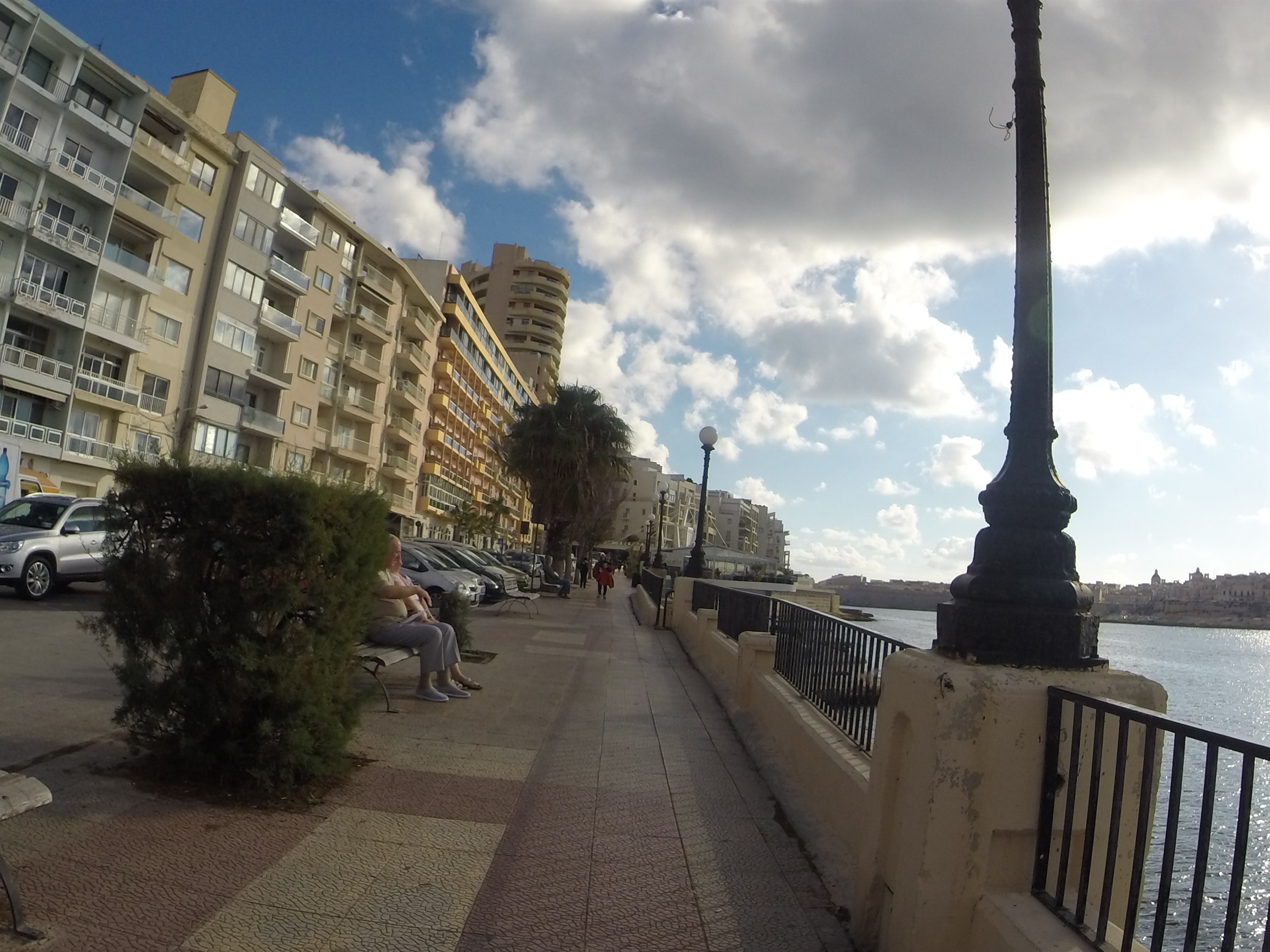
Most guides to where to stay in Malta list eight or nine areas. In practice, for a family villa, there are three: Sliema, St Julian’s, and the rural north around Mellieha. Valletta is spectacular and worth a day, but it is a fortified city of steps and very few family-sized properties. Gozo is a separate island and a separate holiday.
| Area | Best for | Walkable? | Night noise | Car needed? |
|---|---|---|---|---|
| Sliema | Families, first-time visitors, no-car trips | Yes, everything | Low in the residential streets | No |
| St Julian’s | Groups of adults, nightlife, restaurants | Yes | High around Paceville | No |
| Rural north (Mellieha, Golden Bay) | Beach holidays, quiet, sea views | No | Very low | Yes |
| Valletta | Culture, couples, short stays | Yes, but steep | Low | No |
| Gozo | A slower second week | No | Very low | Yes |
The whole island is about 27km end to end, so none of these is far from the others. What changes is what you can do without getting into a car, and with children that is the thing that decides whether a holiday feels relaxed or logistical.
Sliema: The Best Area to Stay in Malta for Families
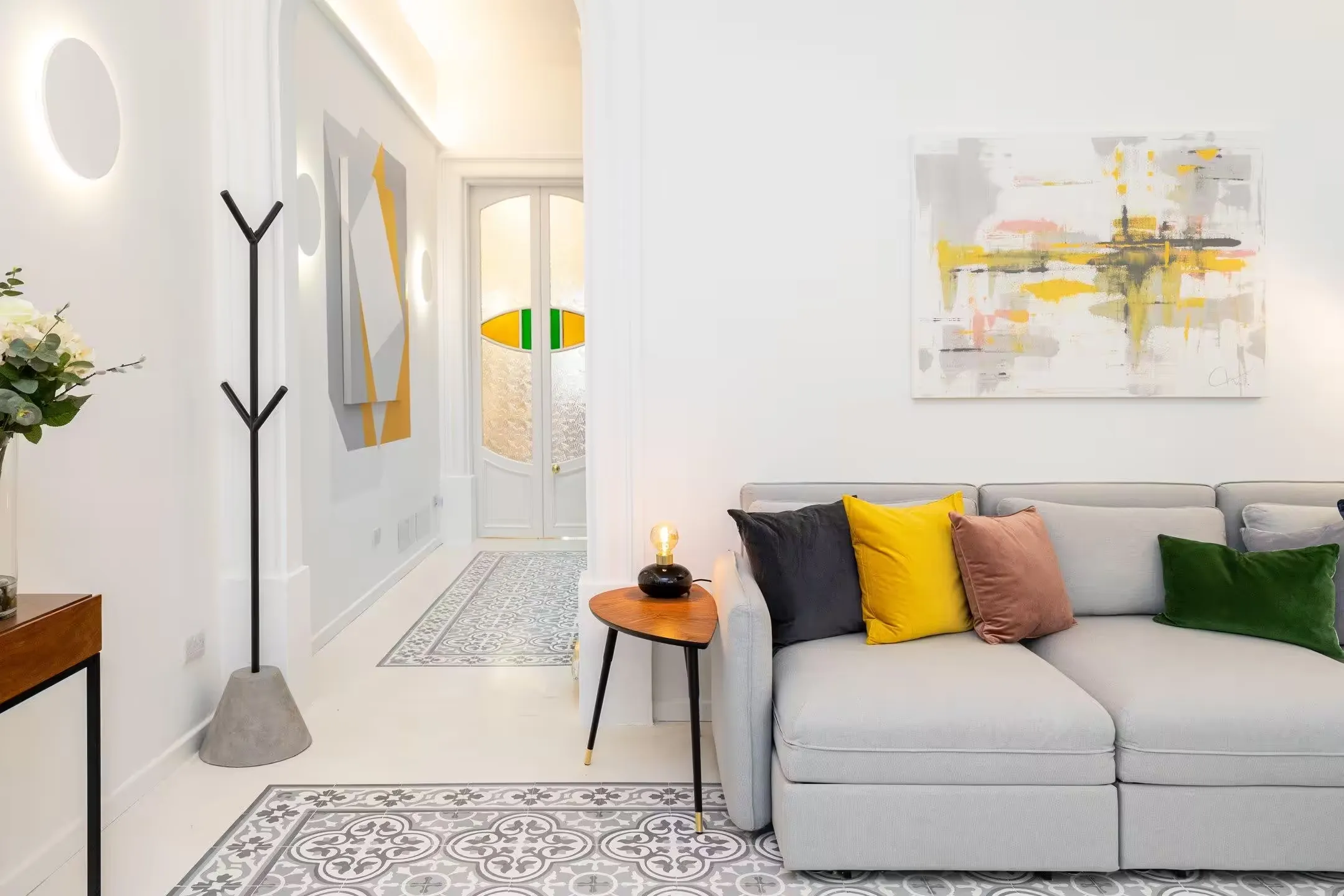
Sliema is a residential seafront town on the north-east coast, directly across the water from Valletta. It has the shops, the promenade, the ferry, and the highest concentration of restaurants outside St Julian’s, and it manages all of that while remaining a place people actually live. That is why it is the standard recommendation for a first trip and the right one for a family villa.
The seafront is a continuous promenade you can walk for miles. Sliema does not have sandy beaches, but it has direct sea access from the rocks, natural rock pools cut by the British Military in the 1960s, and modern beach clubs with their own pools and restaurants. For teenagers who want to swim without a car journey, this is better than it sounds.
Aster House sits in Sliema’s urban conservation zone, which is the quiet grid of streets set back from the seafront. It is a 240 square metre Art Deco townhouse, the result of a three-year restoration of a British Military family home, and it takes nine guests across three bedrooms and three bathrooms. It is 150 metres from the sea, a short walk from the Sliema centre and the promenade, and five minutes on foot from Balluta Bay.
The house has a history worth knowing, because it explains the architecture. Sliema was Malta’s first seaside resort, the place Valletta residents escaped to in the nineteenth century. The street Aster stands on was laid out in the 1920s as the British military expanded its use of Malta as a Mediterranean base, and this townhouse was leased to a British officer and his family who lived in it for two generations. The Art Deco detailing and the original Maltese floor tiles are from that period, not a later pastiche.
It is arranged over three floors, which is the single most useful thing to understand before booking, because it determines how a group spreads out. Nobody has to pass through anybody else’s space to get to their own, and the living areas sit at the top rather than the bottom.
| Floor | What is on it | Why it matters |
|---|---|---|
| Ground | Media lounge and master suite, with a private back garden and a lightwell bathroom | Grandparents or the couple who want their own front-of-house space |
| First | Two further bedroom suites, both en suite | Children or a second family, away from the living areas |
| Second | Kitchen, dining, living room and the BBQ terrace | Where everybody ends up, with the terrace off it |
| Roof | Chill-out zone | Evening drinks and the reason nobody minds the stairs |
Two features are unusual enough to mention on their own. The media lounge has a two-metre voice-controlled projection screen with a smart projector, an Xbox and a popcorn maker, which is what saves a wet afternoon or an over-tired evening with children. And the master suite’s bathroom includes a large bath in the open lightwell, under the sky, with privacy provided by a specially commissioned stained-glass screen.
What Is In Aster House
- Sleeping. Three bedrooms with 180cm super-king beds, all en suite. The master doubles as a family room with a single sofa bed, and the media room has a double sofa bed, which is how it reaches nine.
- Bathrooms. Walk-in power showers in all three en suites, plus the open-air lightwell bath with its stained-glass privacy screen.
- Kitchen. Bosch throughout: fridge freezer, induction hob, full oven and a second combi microwave oven, dishwasher. Nespresso machine, and an osmosis water filter with a UV lamp.
- Outdoor space. A private back garden off the master suite, a BBQ and dining terrace off the kitchen, and a roof chill-out zone above.
- Entertainment. The two-metre projection screen and Xbox in the media lounge, a 55-inch smart TV in the lounge, a 49-inch in the master, and three Amazon Echos.
- Children. Cot, high chair, baby plates and cutlery, a toy box, kids Netflix and Roku channels, and games loaded for different age groups.
- Working. 150mb fibre, a work area with two desks, UK, EU and US sockets, a charging station and an HP laser printer.
- Housekeeping. Daily service is included, which is the part that makes it feel closer to a hotel than a rental.
- Eco. Boosted insulation, rainwater harvested for the toilets, solar hot water, underfloor heating and eco air conditioning in every room including the kitchen.
Air conditioning throughout is worth flagging separately. It is common enough in Maltese hotels and much rarer in rental houses, and in July and August it is the difference between using the middle of the day and hiding from it. Combined with the thick limestone walls, the house stays usable when the temperature outside does not.
Practically, street parking outside is free, though most guests never need it. Everything in Sliema is walkable, Bolt and Uber are cheaper than traditional taxis for the occasional longer trip, and car hire is available five to ten minutes away on foot if you want a vehicle for a day rather than a week.
Why Sliema Works For Families
- No car required. Shops, restaurants, the sea and the ferry are all walkable, which removes the parking problem entirely.
- The Valletta ferry. Roughly five minutes across the harbour, and far more fun for children than a bus.
- Quiet at night. The conservation-zone streets are residential, unlike Paceville twenty minutes north.
- Swimming from the door. Rock pools and beach clubs along the front, no beach transfer needed.
- Two towns for the price of one. St Julian’s restaurants are a five-minute walk, so older children can eat out without a taxi home.
- Everything is open in winter. Sliema is a working town, so it does not shut down out of season the way resort areas do.
St Julian’s: Where to Stay in Malta for Restaurants and Nightlife
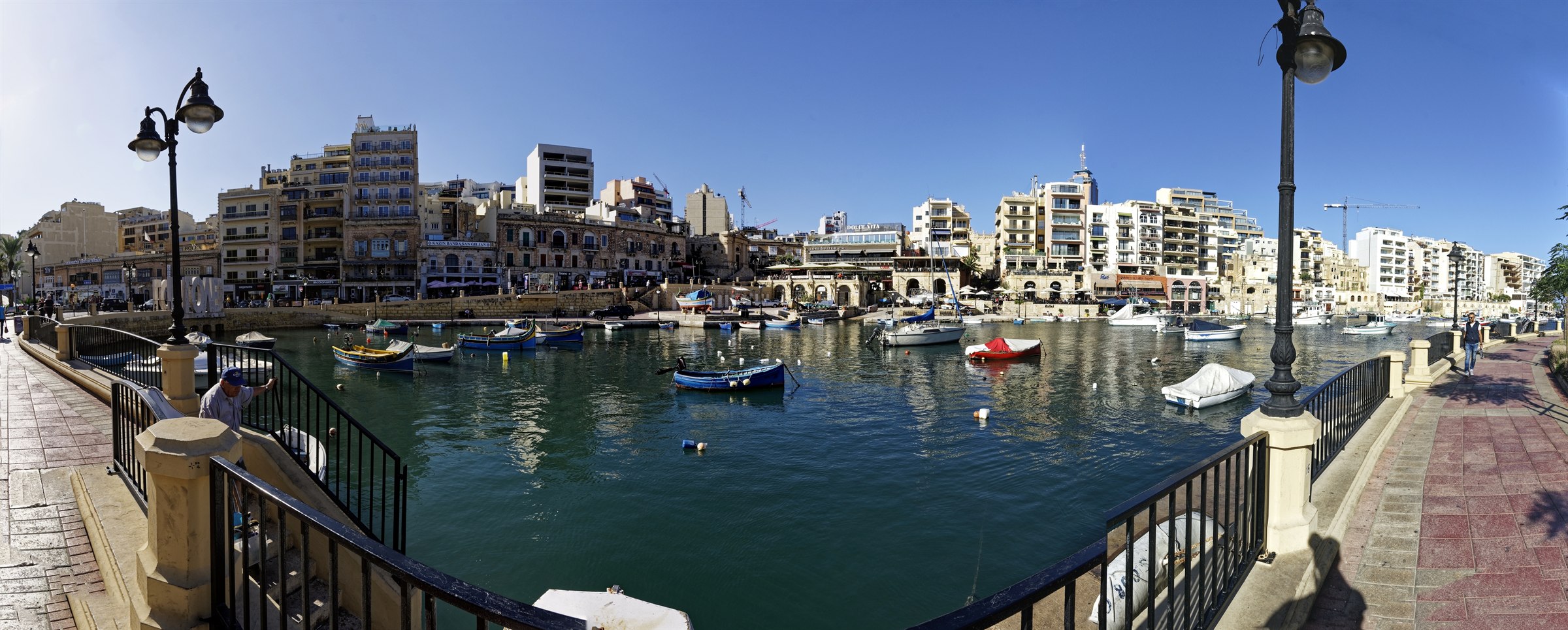
St Julian’s is the next bay along from Sliema and the two effectively run into each other. Spinola Bay, in the photograph above, is the pretty end: traditional luzzu fishing boats moored in front of a curve of restaurants, and one of the most photographed spots on the island. It is a genuinely good place to eat.
Paceville, at the far end of St Julian’s, is a different matter. It is Malta’s nightlife district, and it is loud until very late on summer weekends. Nothing is wrong with that if it is what you came for, but it is the single biggest reason families end up moving accommodation mid-trip. If you are booking St Julian’s with children, check how far the property is from Paceville specifically rather than from St Julian’s generally.
The practical answer for most families is to stay in Sliema and walk to St Julian’s for dinner, which takes about fifteen minutes along the front, or five minutes to Balluta Bay at the near end. You get the restaurants without the 3am taxi doors.
Balluta Bay: The Quiet Middle Ground
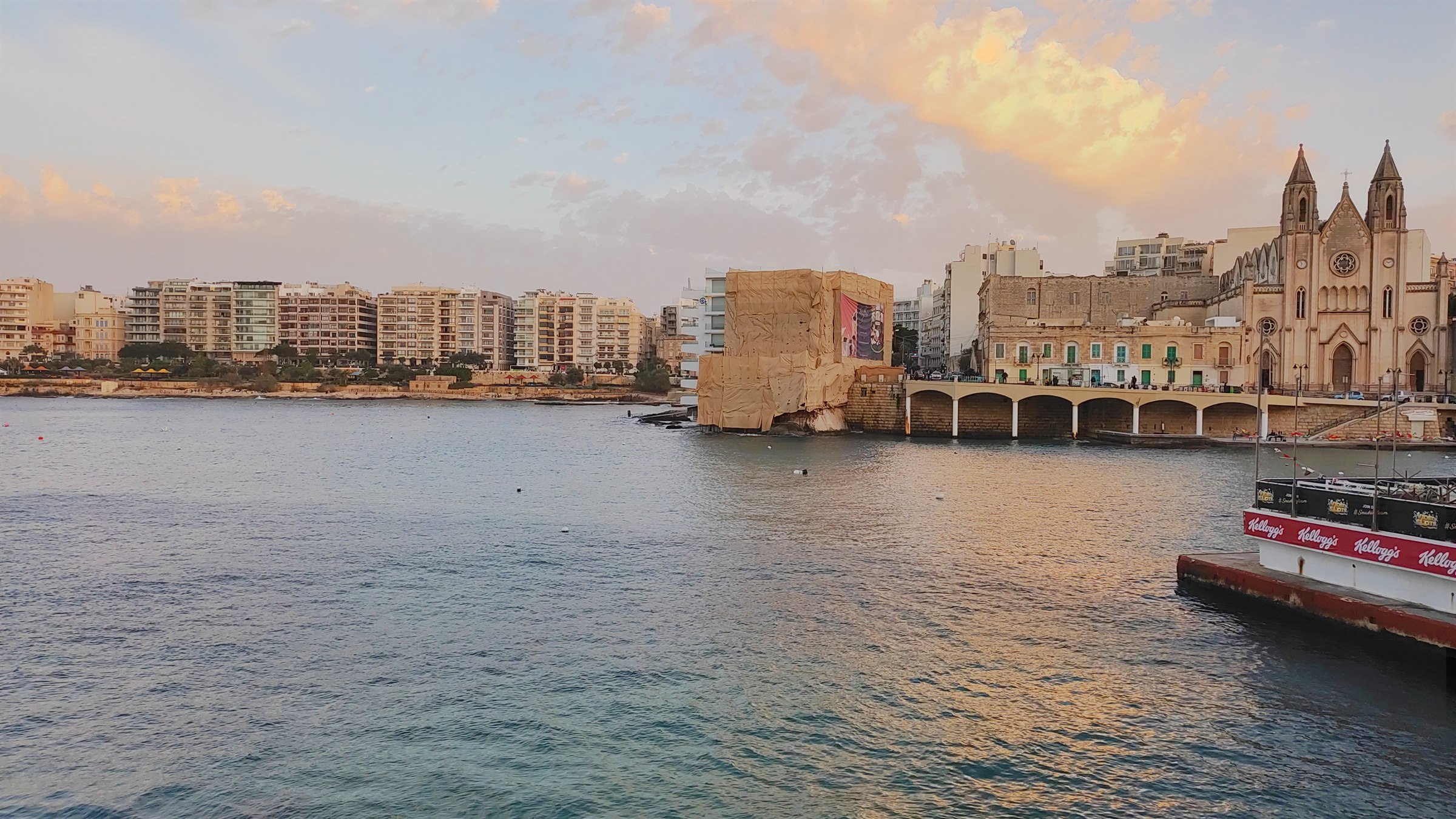
Balluta Bay sits exactly on the boundary between Sliema and St Julian’s, under the twin spires of the Carmelite church. It has a small sandy beach, a square of cafes, and enough going on to feel lively without being a nightlife destination. For anyone staying in Sliema it is the five-minute walk that makes the location work.
This is the bit most area guides skip, because on a map Sliema and St Julian’s look like a choice. On the ground they are a fifteen-minute walk apart with Balluta in the middle, and a family staying near the boundary gets the quiet of one and the restaurants of the other without committing to either.
The Rural North: Where to Stay in Malta for Beaches
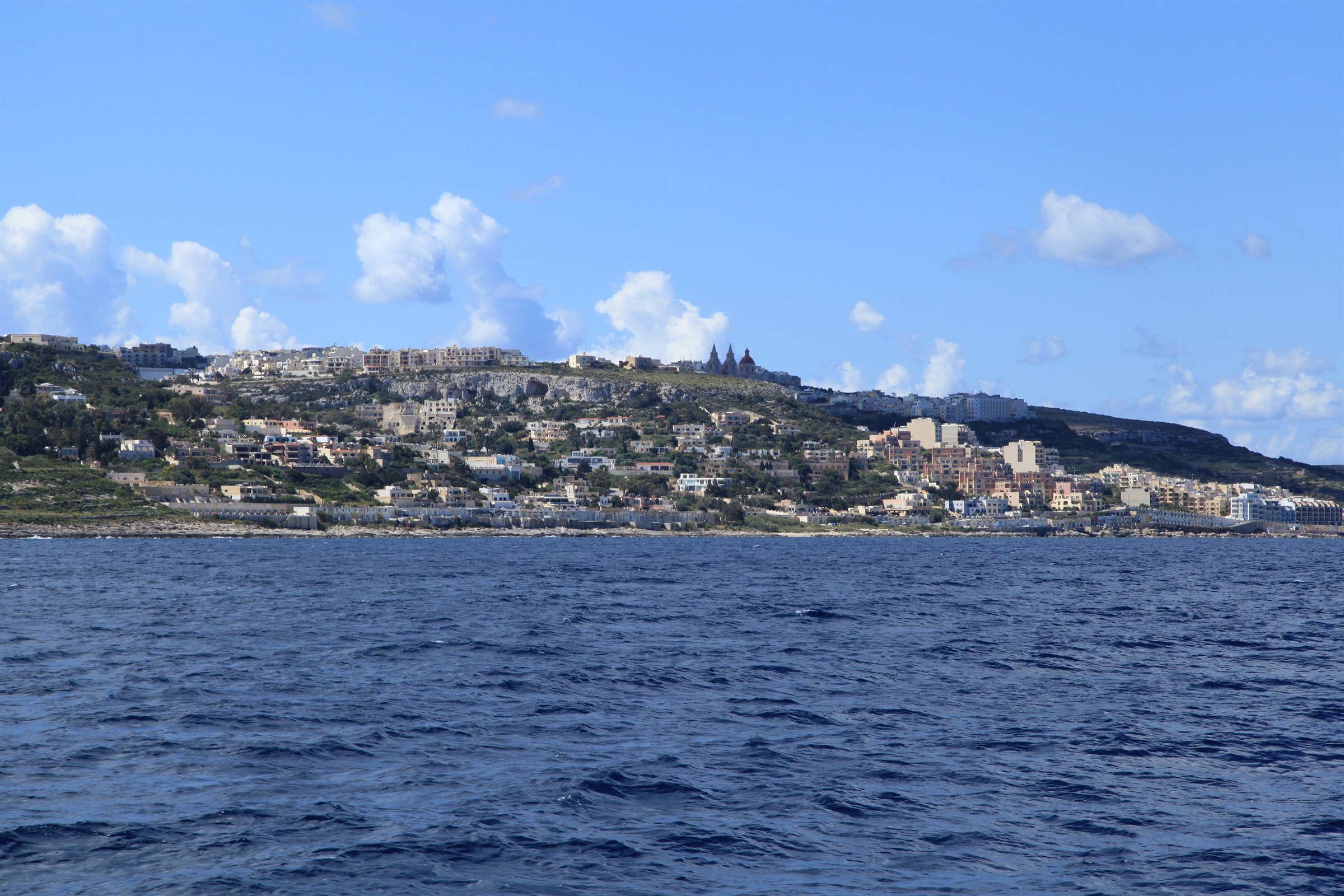
Malta’s sandy beaches are almost all in the north. Mellieha Bay is the largest, and Golden Bay and Ghajn Tuffieha are the ones that appear on postcards. Mellieha itself sits on a ridge above its bay, and the area is markedly quieter and more rural than the Sliema conurbation.
The trade is mobility. Without a car the north is limiting: buses run but they are slow and crowded in summer, and a supermarket run becomes an expedition. With a car it is the better choice for a pure beach holiday, particularly with younger children who want sand rather than rock pools.
The compromise most families settle on is to base in Sliema and drive or take the ferry north for beach days. It is about forty minutes from Sliema to Mellieha, which is a manageable day trip and much less of a commitment than basing there for a week.
Valletta and the Ferry: The Day That Sells Malta
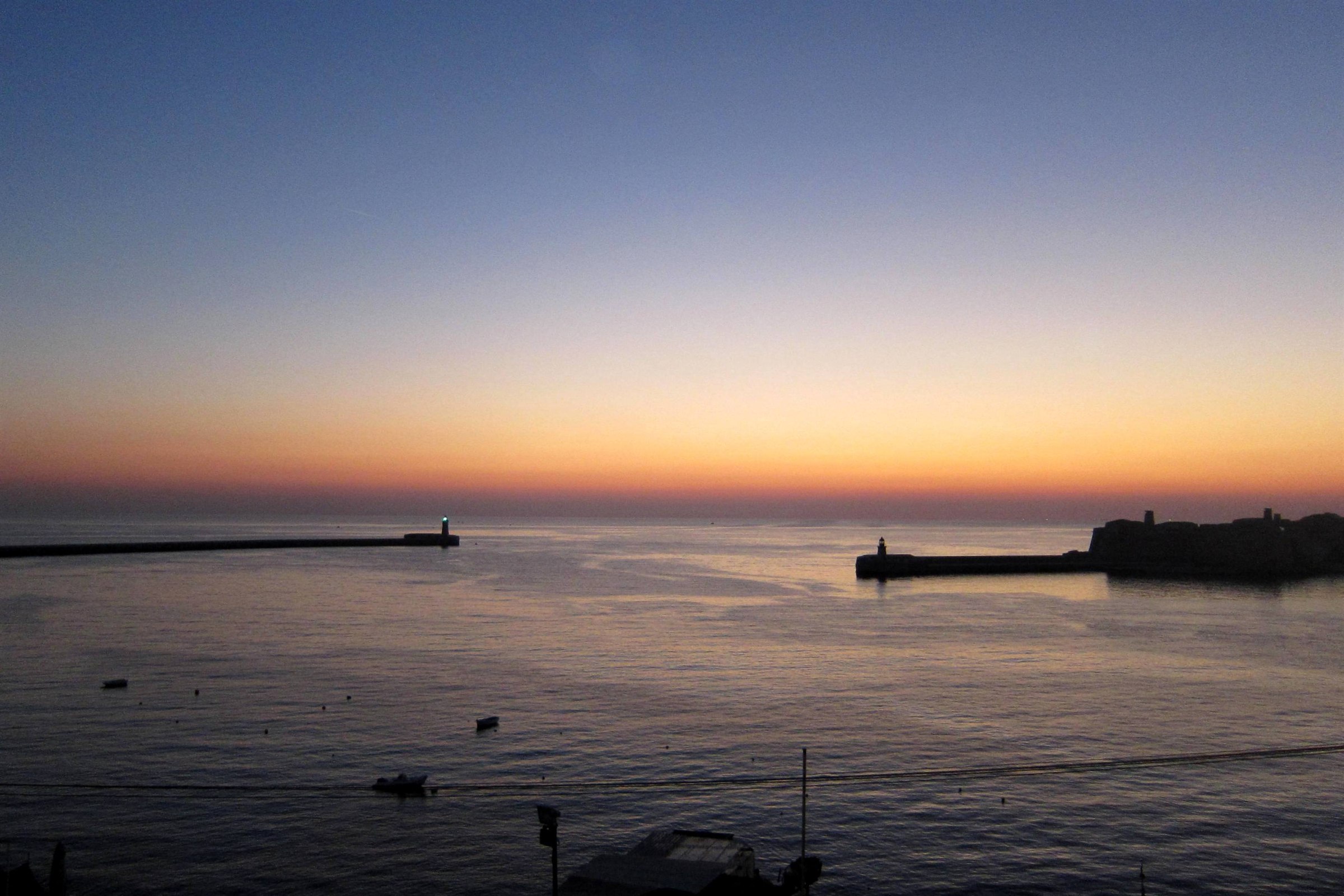
Valletta is a UNESCO World Heritage city built by the Knights of St John, and it is compact enough to see properly in a day. From Sliema the ferry crosses the harbour in about five minutes, which is both the fastest way in and the best introduction to the city, since you arrive looking up at the bastions rather than walking in through a bus station.
Staying in Valletta itself is a different proposition. It is beautiful and quiet at night, but it is a city of steep steps with very little family-sized accommodation and almost no parking. Most families are better off visiting for a day from Sliema than sleeping there, which is the practical reason Sliema wins the where-to-stay question for so many first-time visitors.
What an Art Deco Villa in Malta Actually Means
Malta has an unusual concentration of Art Deco domestic architecture, built largely between the wars when the island was a British naval station and officers’ families were housed in Sliema. Much of it has been demolished for apartment blocks, which is why Sliema’s conservation zone exists and why the surviving townhouses are protected.
Aster House is one of them. It was a British Military family home, restored over three years, and it keeps its original Art Deco features rather than gesturing at the style. Practically, that means high ceilings, generous room proportions and thick limestone walls that stay cool in August, which matters more in a Maltese summer than any amount of air conditioning.
The layout is built for families rather than for maximum headcount. Three bedrooms and three bathrooms means nobody queues, the master suite converts to a family room with an additional single sofa bed, and the media room has a double sofa bed, which is how it reaches nine. There is a toy box, board games and beach towels, which sounds trivial until you are packing for a family of six.

A Note From Susan
“Families arrive worrying they have picked the wrong town, because everything online tells you Malta has ten areas and you must choose correctly. You do not. The island is twenty-seven kilometres long. What you are really choosing is how far you walk to dinner, and in Sliema you can, which is why nobody who books here asks me about hire cars.”
Getting Around Malta Without a Car
The second real decision after where to stay in Malta is the hire car, and for a Sliema base the honest answer is usually no. The island has three usable options and they cover most of what a family wants to do.
The Valletta ferry runs from Sliema across Marsamxett Harbour in about five minutes and is the fastest route into the capital by a wide margin. The bus network reaches everywhere on the island from the Valletta interchange, which is efficient in principle and slow in July when every route fills. Taxis and ride-hailing are cheap by northern European standards and are what most families end up using for beach days rather than committing to a week of car hire.
Driving in Malta is not difficult, but parking in Sliema and St Julian’s genuinely is, and the towns were laid out for far fewer cars than they now hold. If your plan is beaches every day in the north, hire a car. If your plan is a town base with two or three beach days, hire one for those days and walk the rest of the week. That single decision is the difference between a relaxed Maltese holiday and an irritating one.
When to Visit Malta and What It Costs
Malta has one of the longest seasons in Europe. Swimming is comfortable from roughly late May to late October, and the shoulder months at either end are the best value and the most pleasant to walk around. July and August are hot enough that the middle of the day becomes something to plan around rather than through, which is when thick limestone walls and a shaded courtyard start to matter more than a pool.
Winter is mild, wet in bursts, and much quieter. It is a genuinely good time for a city-focused trip, and unlike a resort area, Sliema does not close: the shops, restaurants and ferry all run year-round because people live there. That is a real advantage over basing in the north, where a lot of the tourist infrastructure shuts between November and March.
On price, accommodation moves sharply with season rather than with location. The same villa in Sliema will cost substantially more in August than in May for an identical stay, and event weeks and public holidays push it further. Book the shoulder season if you have the flexibility, and book early if you do not, because the supply of properties that genuinely sleep eight or nine inside a walkable town is small and does not grow.
More to Explore
For groups splitting across several properties, see multi-property bookings across Porto, Palma and Malta. For a Mediterranean alternative with the same walkable-old-town character, read where to stay in Palma old town, or our guide to villas in Porto with a private pool. The full collection of properties covers Malta, Portugal, Spain and the UK.
Jill
Google review · Aster House, Sliema · 10/10
“Serene, comfortable and roomy. Location very convenient, beautifully presented. Perfect for our family reunion. Three bedrooms, three bathrooms, lots of room for socialising. Very serene to come back to after a hot, busy day in Malta. We all loved it.”
Frequently Asked Questions
The questions below are the ones guests and searchers ask most often about staying in Malta, answered with the specifics rather than generalities.
Where Is the Best Place to Stay in Malta?
Sliema for most visitors, and particularly for families. It is walkable, has the Valletta ferry, and stays quiet at night in the residential streets. St Julian’s is better if nightlife is the point, and the northern towns are better for sandy beaches if you have a car.
Where Should I Stay in Malta for the First Time?
Sliema. It is the easiest base to orient yourself from, everything is walkable, and the ferry puts Valletta five minutes away. First-time visitors who base in the north almost always wish they had been closer to the towns.
Where to Stay in Malta Without a Car?
Sliema or St Julian’s. Both have shops, restaurants and sea access within walking distance, plus buses and the Valletta ferry. The rural north is not realistic without a car unless you intend to stay put.
Where to Stay in Malta for Beaches?
The north: Mellieha Bay, Golden Bay and Ghajn Tuffieha hold Malta’s sandy beaches. Sliema has no sand but does have direct sea access from the rocks, 1960s rock pools cut by the British Military, and beach clubs with pools.
Where to Stay in Malta With Kids?
Sliema, away from Paceville. Being able to walk to food and to the sea removes most of the friction of a family holiday, and the ferry is an attraction in itself. Check any St Julian’s property’s distance from Paceville before booking.
Is It Better to Stay in Valletta or St Julian’s?
Valletta for culture and quiet evenings, St Julian’s for restaurants and nightlife. For families, often neither: Sliema sits between them, is quieter than St Julian’s and far more practical than Valletta, which is built on steps and has little family-sized accommodation.
Where to Stay in Malta for a Week?
One base is enough. Malta is 27km long and nowhere is more than about an hour away, so moving accommodation mid-week costs you a day and gains very little. Pick a walkable town and day-trip from it.
Are There Art Deco Villas in Malta?
Yes, mainly in Sliema, built between the wars when the island was a British naval station. Many have been lost to apartment development, which is why Sliema has an urban conservation zone. Aster House is a restored British Military family home of that period.
Aster House, Sliema
Nine guests, three bathrooms, 150 metres from the sea.
A restored Art Deco townhouse in Sliema’s conservation zone, five minutes from Balluta Bay and a short ferry from Valletta.
See Aster HouseImage credits: Sliema seafront by Alan C. Bonnici (CC BY-SA 3.0); Spinola Bay by Txllxt TxllxT (CC BY-SA 4.0); Balluta Bay by Josi (CC BY-SA 4.0); Grand Harbour breakwater by Martin Furtschegger (CC BY 3.0); Mellieha by Frank Vincentz (CC BY-SA 3.0). All via Wikimedia Commons. Property photograph by Espais Roca. Property details checked against the Aster House page, August 2026.