At A Glance
Palma Old Town is the best base in Mallorca if you want to walk everywhere, and the quieter streets north of Plaça Major give you the location without the noise.
- Casa Roca sits on a quiet residential street 2 minutes’ walk from Plaça Major and 4 minutes from the Olivar food market.
- Palma’s nearest beach is 750 metres away, so you can stay in the old town and still swim before breakfast.
- Suites and apartments sleep 2 to 6 guests, ranging from 20 to 80 square metres.
- The wooden train to Sóller leaves from Plaça Espanya, a 6 minute walk from the front door.
- Daily homemade breakfast is made from what came out of the market that morning.
Palma is the rare European city where you can land at lunchtime, drop your bags, and be looking at a Gothic cathedral fifteen minutes later without ever getting into a car. That is the whole argument for staying in the old town rather than out at a resort, and it is why we spent ten years restoring Casa Roca, one of the most emblematic buildings in Palma’s Casco Antiguo, into a place where families and friends can actually stay.
People ask me all the time which part of the old town they should book, and the honest answer is that it depends on whether you want to be in the middle of the noise or two streets away from it. I have written this guide the way I would explain it to a friend, area by area, with real walking times. If you are travelling as a larger party, it is worth also reading our guide to Espais Roca properties for large groups, because Palma works very differently when there are twelve of you.
Everything below is based on the streets we walk every week. Distances are measured from our own front door on Carrer dels Hostals, so you can judge them against wherever you end up booking.
Staying in Palma this year?
Casa Roca has suites and apartments for 2 to 6 guests, two minutes from Plaça Major.
Why Stay in Palma Old Town Rather Than the Resorts
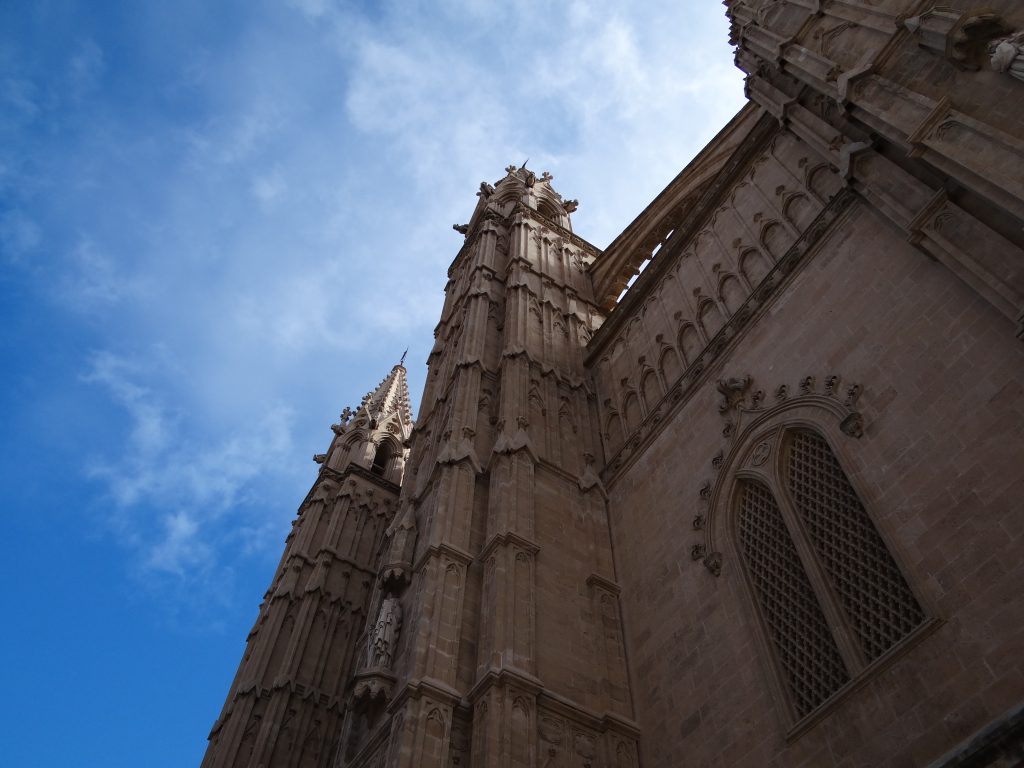
Most people arriving in Mallorca for the first time book somewhere along the coast, then spend the week driving in and out of Palma to see the things they came for. It works, but you lose a great deal of the day to parking. Staying inside the walls flips that around. The cathedral, the Arab baths, the markets, the shopping streets and about forty restaurants worth eating at all sit inside an area you can cross on foot in twenty-five minutes.
The other thing that surprises guests is that the old town is not cut off from the sea. Palma’s nearest beach is 750 metres from our front door, which is closer than the walk from the car park to the sand at most resorts. You can swim early, come back, shower, and be having coffee in Plaça Major by half past nine.
There is a quieter benefit that only shows up after a few days. When you are staying centrally you stop planning excursions and start simply going out, which means you see far more of the city in a short break than you would from a base twenty minutes away. Guests on three-night stays routinely tell us they covered more ground than they expected, and it is entirely down to not having to organise transport around every decision.
What you are trading away is the pool terrace and the buffet. If your holiday depends on those, a resort is the better call and I would say so honestly. If what you want is to walk out of the door in the evening and choose between a wine bar, a tapas counter and a Gothic cloister lit up at night, the old town is not really a close contest.
Where to Stay in Palma Old Town: The Five Areas Compared
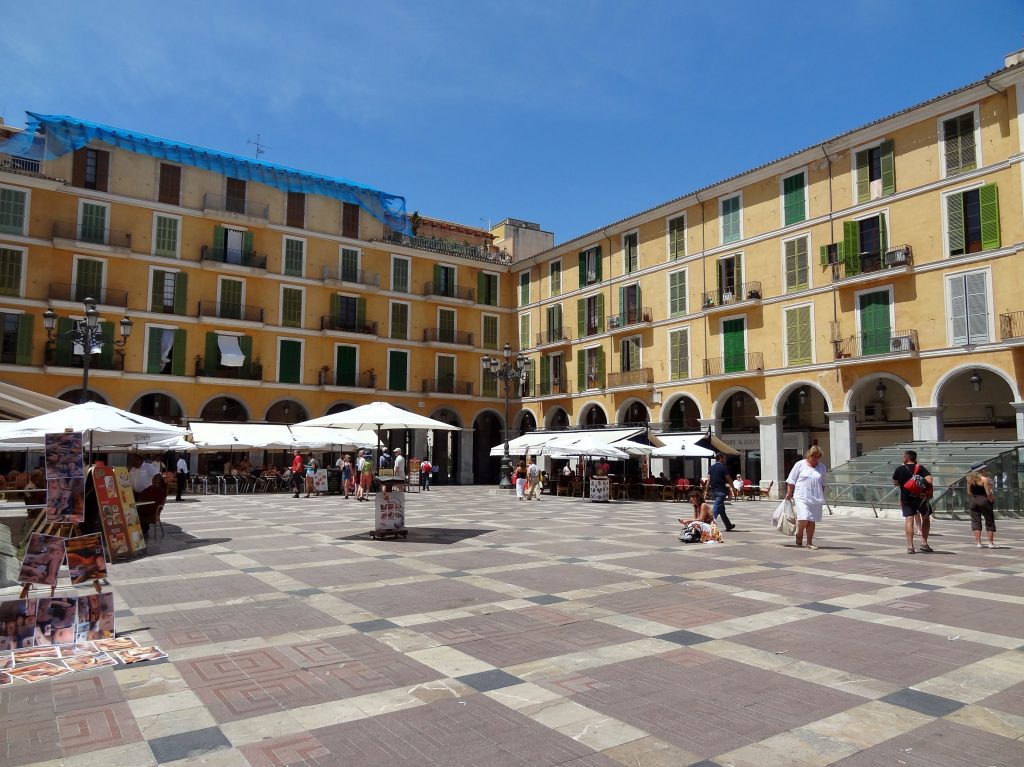
Palma’s Casco Antiguo is not one neighbourhood. It is five or six distinct pockets that feel completely different after dark, and picking the wrong one is the single most common booking mistake I see. Here is how they actually compare.
| Area | What it suits | Evening noise | Walk to La Seu |
|---|---|---|---|
| Plaça Major & Sant Miquel | Families, first visits, walkers | Quiet on the side streets | 10 min |
| La Seu (Cathedral Quarter) | Couples, architecture, photography | Very quiet, few shops | 2 min |
| La Llotja | Restaurants, late dinners | Loud until 1am | 7 min |
| Sa Gerreria | Bars, younger groups | Loud, busiest quarter | 12 min |
| Passeig del Born | Shopping, easy access | Traffic noise, not nightlife | 5 min |
We chose Carrer dels Hostals for a specific reason. It sits in the Plaça Major and Sant Miquel pocket, which puts you two minutes from the main square and four from the market, but it is a residential street rather than a going-out street. Guests get the location of the centre and the sleep of a side street, and there is nobody living above them, which in an old town building matters more than people expect.
If you are booking elsewhere, my one piece of advice is to look at the street on a map before you commit, not just the district name. La Llotja and Sa Gerreria are wonderful to eat and drink in and difficult to sleep in, and plenty of listings describe both simply as “old town”.
Check Before You Book
- Is the street residential or lined with bars? Ask directly, the answer is rarely in the listing.
- Is there a lift? Many old town buildings have none, and Palma’s staircases are steep.
- Is there air conditioning in the bedroom as well as the living room? July and August need both.
- Where is the nearest secure parking? Old town streets are largely restricted to residents.
- Is breakfast made on site, or is it a voucher for the café next door?
Casa Roca: Our Boutique Hotel in Palma Old Town
Casa Roca was for five generations a family papelería, a paper shop that locals came across the city to buy from, and the business behind it goes back the best part of two centuries. The building we restored is the Art Deco one that family built, and Almacenes Casa Roca is still the name older Palma residents use when they give you directions. Ten years of work went into it, which is longer than we planned and about right for what the building deserved.
It is the second in our Boutique Maison series, after Canto de Luz in Porto, and it works the same way. You get the service and the breakfast of a small hotel with the space and the kitchen of an apartment. Suites and apartments run from 20 to 80 square metres and sleep 2 to 6 guests, so a couple and a family of five can stay in the same building without one of them compromising.
The rooms come in five shapes, and which one suits you depends more on how you travel than on how many of you there are.
| Room type | Sleeps | Defining feature | Best for |
|---|---|---|---|
| City Suite | 2 | Open-plan studio with large soaking tub | Couples, short breaks |
| Luxury Suite | 2 | Floor-to-ceiling windows over the rooftops | Couples wanting the view |
| Retreat Suite | 2 to 3 | Separate living area, spa-style bathroom | Longer and working stays |
| 1 & 2 Bed Residence | 2 to 4 | Super-king ensuites, terrace or full-height windows | Families wanting a kitchen |
| Penthouse | 6 | Three bedrooms, chef’s kitchen, roof terrace | Groups and celebrations |
Practical things that matter and rarely appear in listings: there is a super-king 180cm bed that splits into two singles on request, blackout blinds throughout, air conditioning and winter heating in both the bedroom and the living room, a travel cot and high chair, fibre to the premises with business-grade internet, a safe that a laptop actually fits inside, and secure private parking two minutes’ walk away. Check-in runs 24 hours because flights into Palma do not respect reception hours.
Breakfast is made in the building every morning from what came back from the market, and it changes daily. That breakfast is the single thing guests write to us about most, and it is the reason we have ended up top of Tripadvisor in the other cities we have opened in.
What Is Included in Every Stay
- Daily homemade breakfast, market-sourced and changing each morning.
- Wine Pass for the tasting room, with more than 40 Mallorcan labels by the glass.
- Access to the rooftop terrace and the Art Deco bar.
- Travel cot, high chair, kids’ cutlery and plates, toys and children’s channels.
- Smartlock entry with guest-specific codes and 24 hour check-in.
- Nest Protect smoke detection, fire blanket and first aid kit in every space.
Your Base in the Heart of Palma Old Town
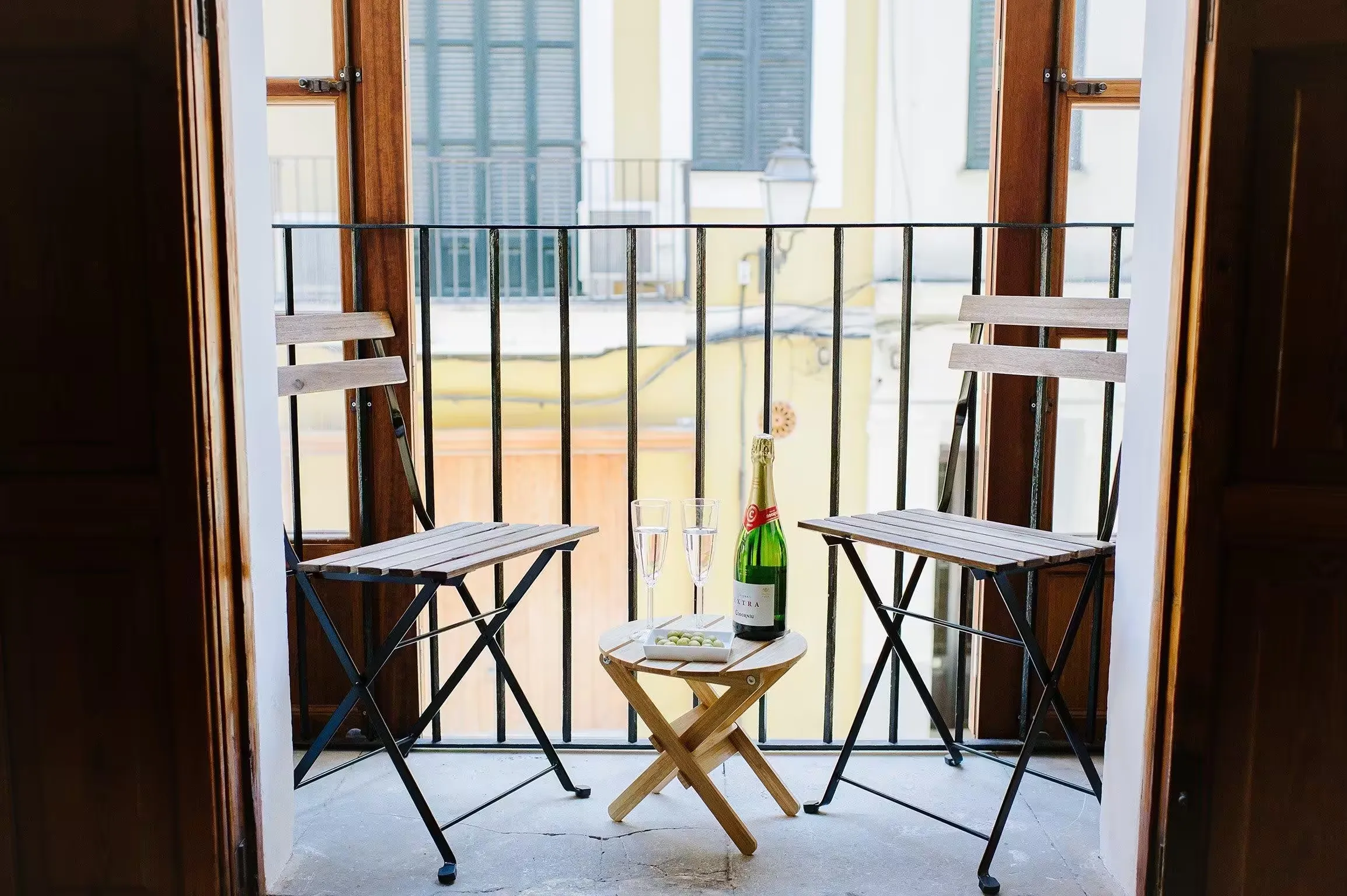
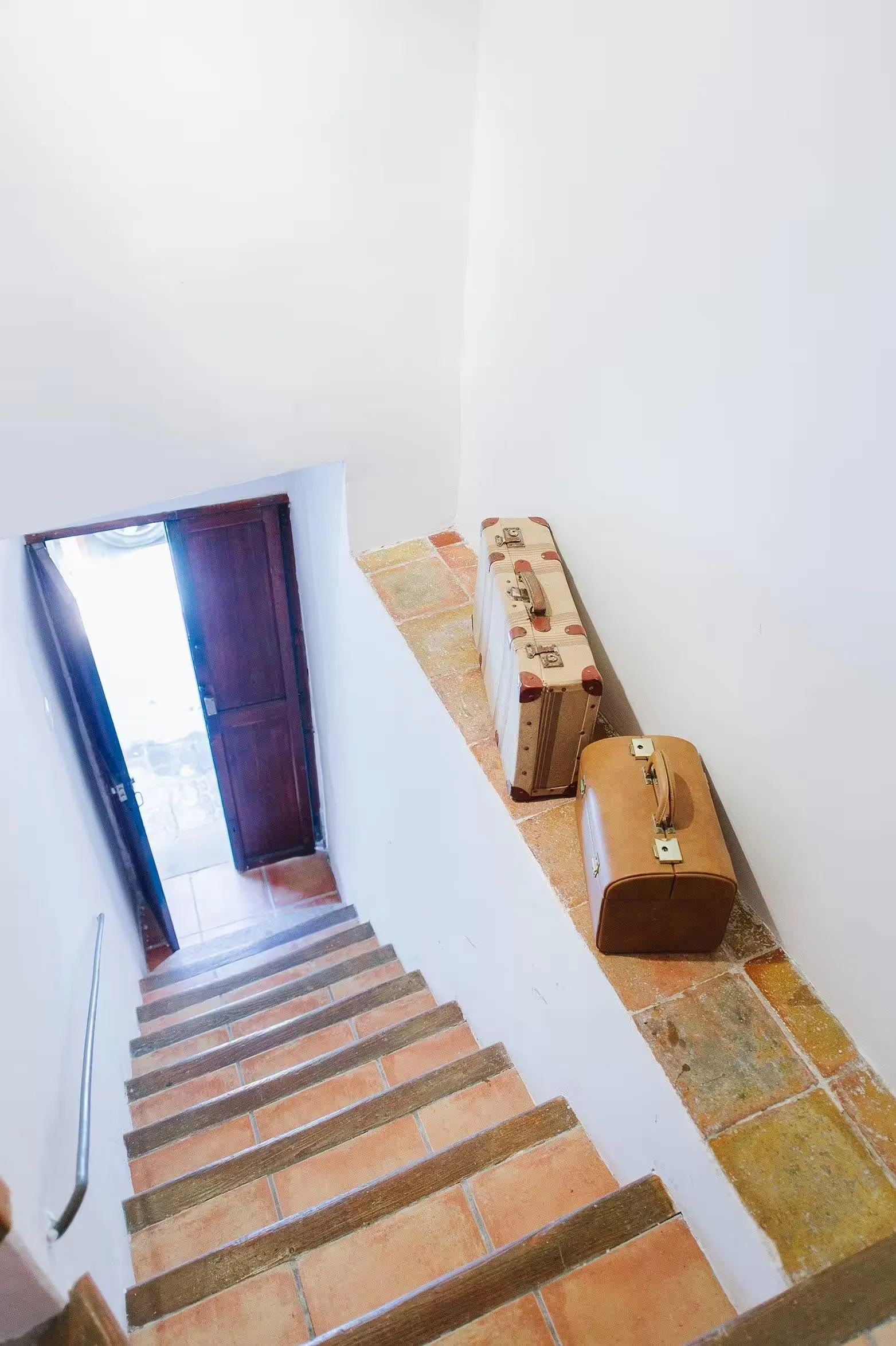
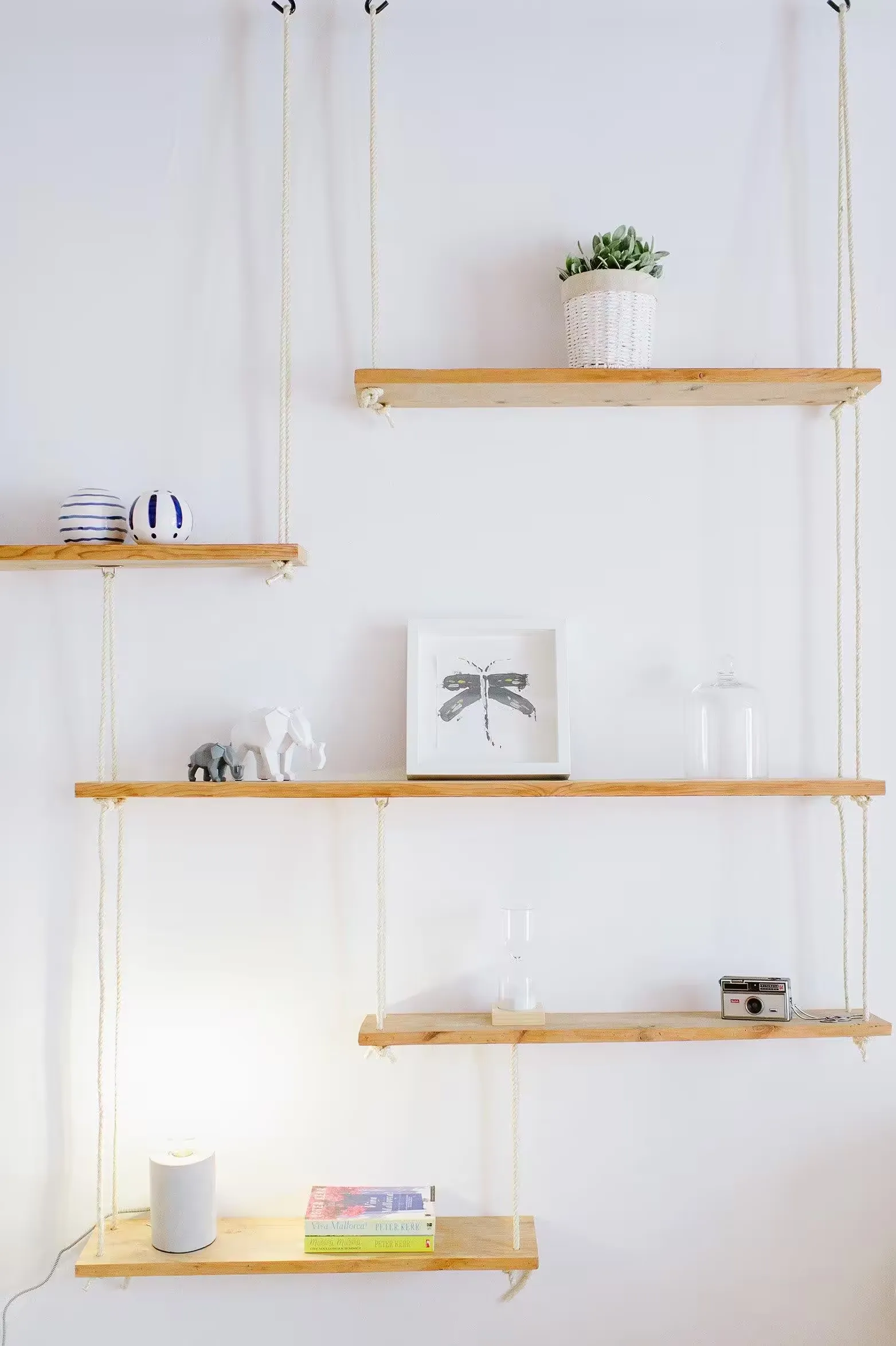
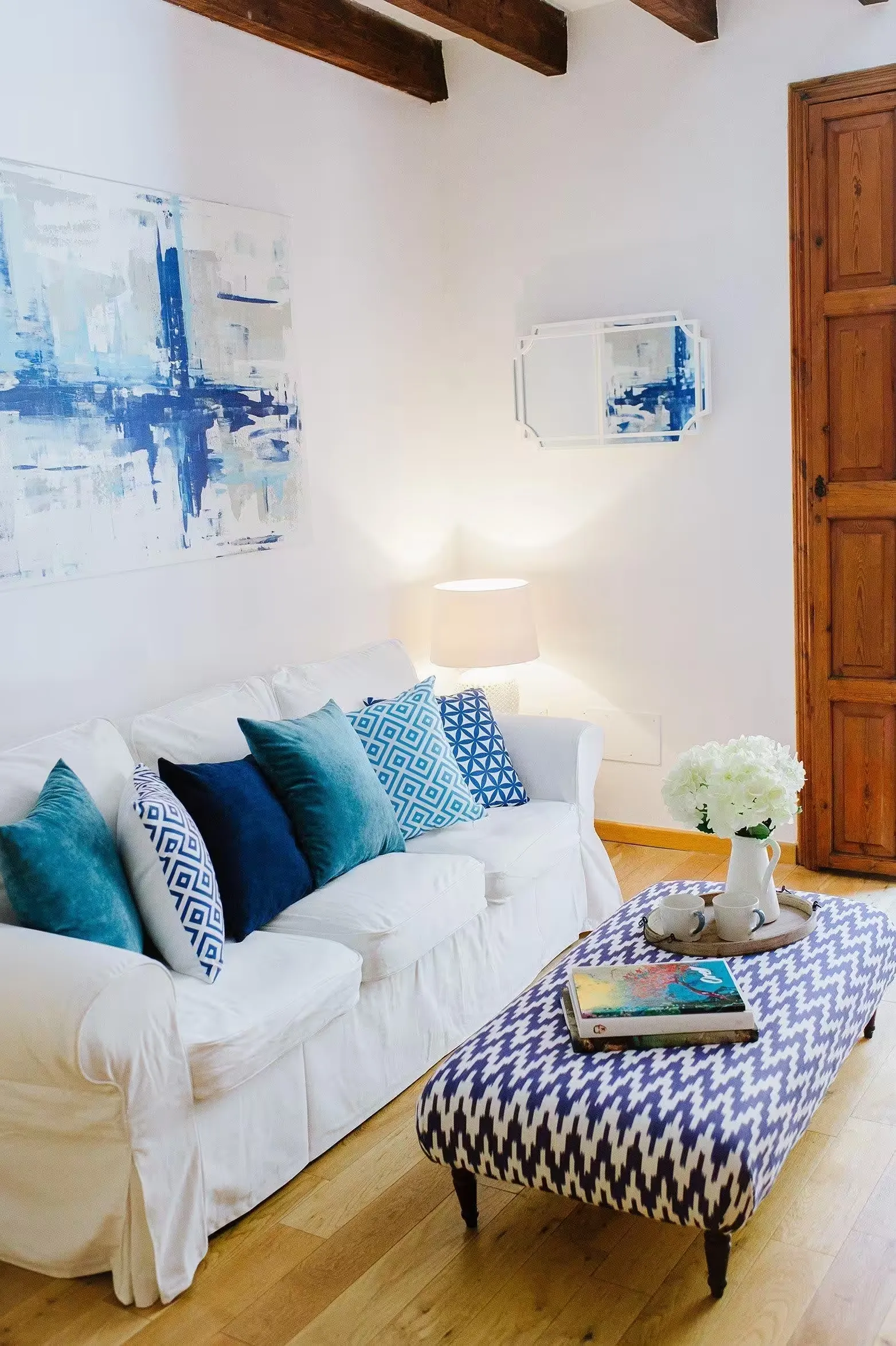
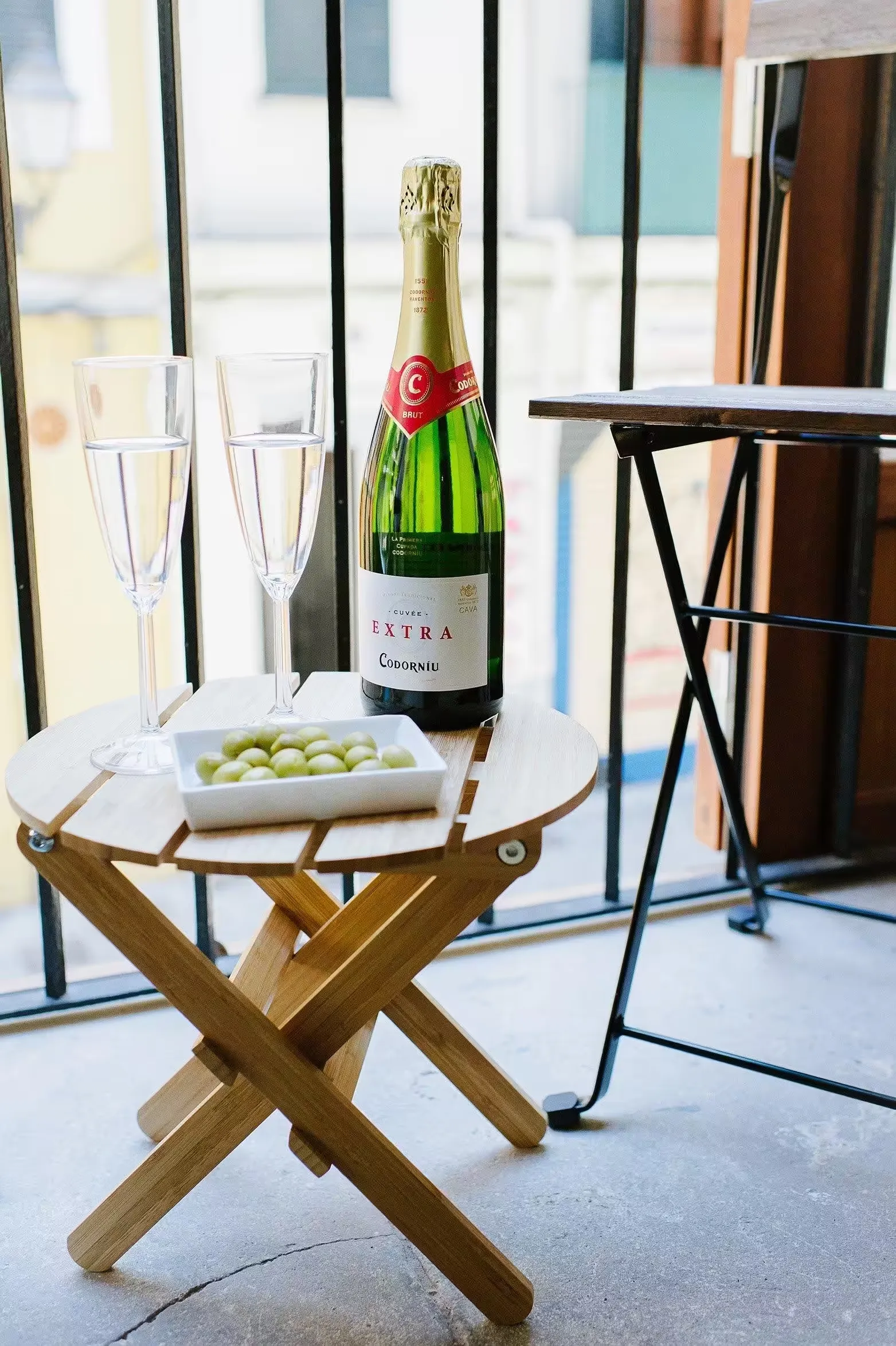
Casa Roca — a lovingly restored Art Deco building on Carrer dels Hostals
What Is Actually Within Walking Distance
These are the five places I send every guest to in their first two days, in the order I would do them. All walking times are from our door.
1. Plaça Major (2 minutes)
The arcaded square at the centre of the old town, built over what was once the site of the Inquisition headquarters, now given over to café terraces, street musicians and a craft market on most mornings. It is the natural orientation point, and once you have stood in it the rest of the street plan makes sense.
Go early if you want it quiet. By eleven the terraces fill with day visitors off the cruise ships, and the prices on the square are noticeably higher than they are one street back. My advice is to use it to get your bearings and then eat somewhere on Carrer de Sant Miquel instead.
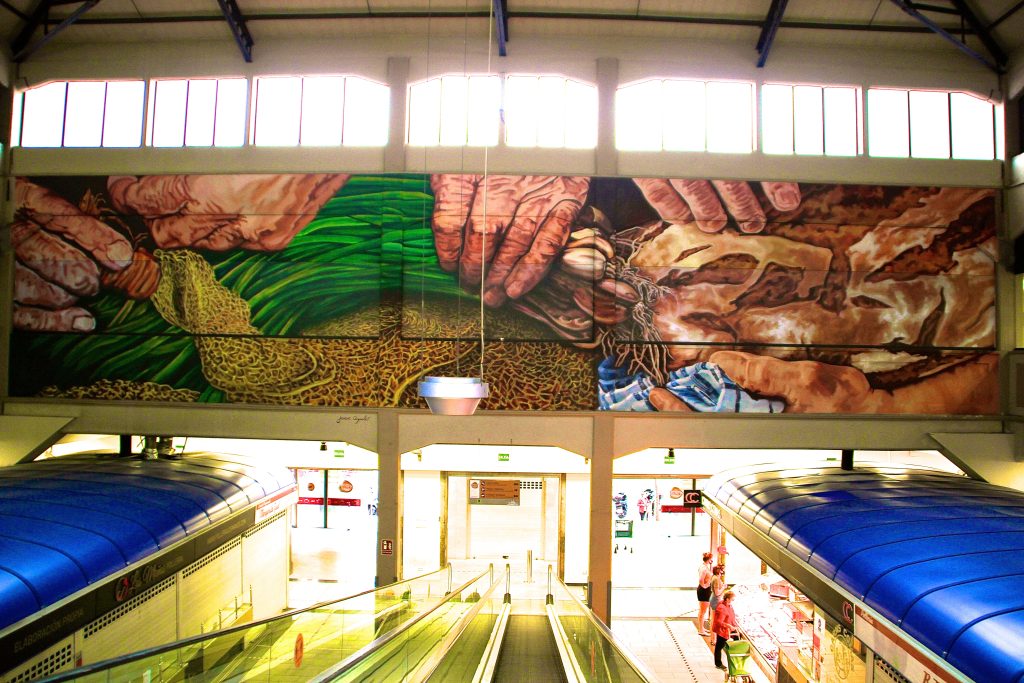
2. Mercat de l’Olivar (4 minutes)
Palma’s main food market and the reason our breakfast changes every day. Two floors of fish, cured meat, cheese, fruit and a whole gallery of small bars where the stallholders eat. It is a working market rather than a tourist one, which means it is busiest and best before about one o’clock.
If you are staying in one of the apartments with a full kitchen, this is where the holiday gets good. Buy the fish in the morning, cook it that evening, and you will eat better than most restaurants for a fraction of it. The market is closed on Sundays, so plan around that.
3. La Seu, Palma Cathedral (10 minutes)
The Gothic cathedral on the seafront, begun in the thirteenth century and worked on for four hundred years, with a rose window that is among the largest in the Gothic world. Antoni Gaudí spent a decade altering the interior in the early 1900s, and the canopy above the altar is his. Full details and current opening hours are on the cathedral’s official site.
Two practical notes. The light through the rose window falls across the interior wall in early morning, which is worth the early alarm and is why photographers queue at opening. And the cathedral closes to visitors on Sunday because it is a working church, which catches a lot of short-break guests out.
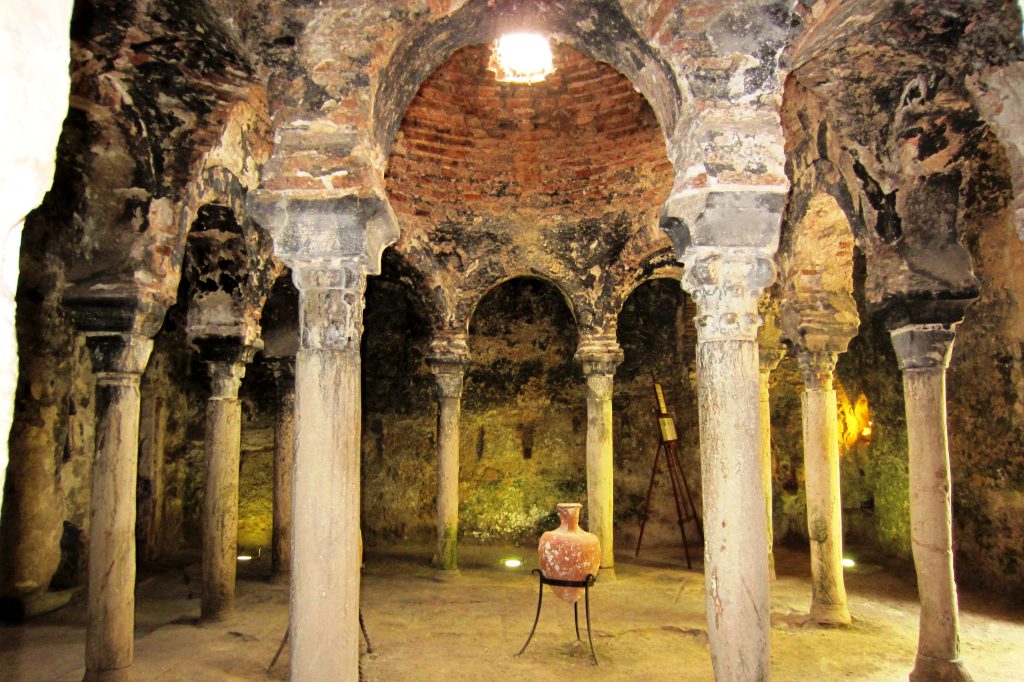
4. Banys Àrabs, the Arab Baths (12 minutes)
One of the very few structures left standing from Madina Mayurqa, the Muslim city that stood here before the Christian conquest of 1229. What survives is a small domed chamber on twelve columns, each of them reused from earlier Roman and Byzantine buildings, set behind a walled garden.
It takes about fifteen minutes to see and it is the quietest thing in the old town. Guests often skip it because it is small, and then tell me afterwards that the garden was the part of Palma they remembered. Go in the late afternoon when the walls hold the heat.
5. Plaça Espanya and the Sóller Train (6 minutes)
The wooden train to Sóller has run since 1912, crossing the Tramuntana mountains through thirteen tunnels on the way to the orange groves on the north coast. The carriages are the original ones. It is the best day out on the island that does not need a hire car, and the station is a six minute walk away.
Book the morning departure and take the vintage tram down to the Port de Sóller at the other end. Come back on the late afternoon train and you will be walking back into the old town in time for dinner, which is exactly the sort of day that makes staying central worth it.
Getting Around Palma Without a Hire Car
The question I am asked most after “which area” is whether a car is necessary. For a stay based in the old town, it is not, and in most cases it actively gets in the way. Old town streets are largely restricted to residents, parking is scarce and expensive, and almost everything inside the walls is quicker on foot than it is by any other means.
| Getting to | How | Roughly |
|---|---|---|
| Airport to old town | A1 bus to Plaça Espanya, or taxi | 15 to 20 min |
| Anywhere inside the old town | On foot | Under 25 min |
| Nearest beach | On foot, 750 m | About 10 min |
| Sóller and the north coast | Wooden train from Plaça Espanya | Half-day trip |
| Rest of the island | Bus or train from Plaça Espanya | Varies |
The exception is if you plan to spend most of the week away from Palma, touring the Tramuntana or the eastern beaches. In that case hire a car for the two or three days you actually need it rather than for the whole stay, and use our secure private parking two minutes away rather than looking for a space. Guests who hire for the full week almost always tell me afterwards that the car sat still for half of it.
Eating and Drinking Around the Old Town
Casa Roca is a wine hotel, which is not a phrase I used before we opened it. There are more than forty Mallorcan labels available by the glass, poured through wine machines so you can try a Callet or a Manto Negro without committing to a bottle, and the island’s winemakers come in to host sessions in the tasting room. Mallorcan wine has changed enormously in the last decade and almost nobody outside Spain has noticed yet.
For eating out, the rule in Palma is the same as the rule in most old cities. One street back from the square, and look at who is sitting there. Sa Gerreria and La Llotja have the density of good restaurants, and both are inside a ten minute walk. The tapas counters inside the Olivar market are the cheapest good meal in the centre.
Timing matters more here than most British visitors expect. Mallorcan kitchens generally do not fill until nine in the evening, and a restaurant that looks empty at seven is not a bad restaurant, it is simply early. If you are travelling with children who cannot wait that long, eat at the market counters at lunchtime and keep the evening light.
If you want someone to do the navigating for you, our sister brand Tasting Palma runs small-group food tours through the old town, a market tour with a tapas class, and gin, wine and coffee tastings. It came out of guests asking us the same question every week about where to eat, and it is the answer we would give anyway, with someone walking you there.
When to Visit, and What the Old Town Is Like Each Season
Palma has a longer usable season than most Mediterranean cities because so much of what you come for is indoors or in shade. The old town works in February in a way that a beach resort does not.
| Season | What it is like | Worth knowing |
|---|---|---|
| Mar to May | Warm, quiet streets, everything open | The best walking weather of the year |
| Jun to Aug | Hot, busy, long evenings | Air conditioning in the bedroom matters |
| Sep to Oct | Warm sea, thinning crowds | Arguably the best all-round month is September |
| Nov to Feb | Mild, quiet, local | Some coastal places shut, the city does not |
If you have any flexibility, September is the one I would pick. The sea is at its warmest after a summer of heating up, the cruise-ship crowds on Plaça Major have thinned, and the restaurants are still running full summer service. May is the close second and is better if you would rather walk than swim.
What to Pack for the Old Town
- Shoes you can walk on stone in. Palma’s old streets are unforgiving in anything flimsy.
- Shoulders covered if you plan to go inside the cathedral, which enforces it.
- A light layer for evenings, even in August, once the sea breeze picks up.
- A tote for the Olivar market, which does not hand out bags.
- A refillable bottle. Palma tap water is safe and there are public fountains.
Booking Casa Roca, and What Suits Which Group
Rooms are booked directly through our own system rather than through an agency, which means what you see is what we have. The exclusive occupancy option is the one worth explaining. It gives you all ten spaces, the Art Deco bar, the spa and the rooftop terrace for your party alone, which for a milestone birthday or a family reunion works out closer to a private villa than a hotel. We do the same thing in Porto with the twelve-bedroom merchant townhouse, and those two buildings together are how most of our larger group bookings end up being planned.
For anything involving more than one household, book earlier than feels necessary. Whole-building availability on specific dates goes long before individual rooms do, and the summer weeks are usually gone by the spring.
A Guest Review
“We brought our 5 month old and were amazed by all the baby amenities Susan had put in the apartment; baby bath, baby cot, lots of toys, high chair, rocking chair and a play rug. We instantly felt at home and relaxed. The location is amazing, super central in the old town and all the main sights were walkable through beautiful old town streets. We never had to take the same route twice. When we come back to Palma we will not hesitate to stay here again! Highly recommended.”
Helge — stayed in Palma
Combining Palma With Porto, Lisbon or Malta
A good number of guests do not stop at one city, and Palma sits well in a two-centre trip. Porto is a straightforward connection and Canto de Luz is the closest thing we have to Casa Roca in feel, a boutique maison in the old town with a heated pool and the same daily breakfast. It also has the Canto Cooking school on site, which is the Porto equivalent of what Tasting Palma does here.
For Lisbon, Casa Almada is a central apartment built for families who want to walk to everything, which is the same logic as Casa Roca applied to a different city. And if the trip is heading east instead, Aster House in Sliema is an Art Deco townhouse near the sea with a rooftop and space for nine.
Booking two of them is one conversation rather than two, and we will line the dates up for you. It is the part of the job I enjoy most, because it is the closest thing to planning the trip with you.

A Note From Susan
“We looked at buildings in Palma for years before this one came up, and what decided it was the street rather than the building. You can restore anything, but you cannot move a house two minutes from Plaça Major onto a road where people actually sleep. When guests come down in the morning and tell me they did not hear a thing, that is the bit I am proud of.”
More to Explore
If you are still deciding where to base yourself, our full collection of properties covers Spain, Portugal, Malta and the UK. For groups, the guide to properties that suit larger parties is the practical place to start, and the family travel pages set out what we put into every property for guests travelling with children.
Frequently Asked Questions
What Is The Best Area To Stay In Palma?
For a first visit, the streets around Plaça Major and Carrer de Sant Miquel give you the best balance. You are within a 10 minute walk of the cathedral, 4 minutes from the Olivar market and 6 minutes from the Sóller train, but on residential streets rather than bar streets. La Llotja and Sa Gerreria have better restaurants and considerably more noise after midnight.
Is Palma Worth Visiting?
Palma is one of the few Mediterranean capitals where the historic centre is still a working city rather than a museum. You can walk the whole old town in about 25 minutes, and it holds a 13th-century Gothic cathedral, an 11th-century Arab bath house and a daily food market inside that area. Most guests who come for two nights tell us afterwards they should have booked four.
Does Palma Have A Beach?
Yes. Palma’s nearest beach is 750 metres from Casa Roca, which is roughly a 10 minute walk, and the longer stretch of Platja de Palma runs east of the city. Staying in the old town does not mean giving up swimming, and in practice guests tend to swim early and sightsee later.
Is Palma Expensive?
Palma is mid-range by Spanish city standards and cheaper than the coastal resorts for food. The reliable saving is to eat one street back from Plaça Major rather than on it, where the same dish is routinely a third less. The tapas counters inside the Mercat de l’Olivar are the best value in the centre.
How Do You Get From Palma Airport Into The Old Town?
The airport is about 8 km from the centre. The A1 airport bus runs to Plaça Espanya, which is a 6 minute walk from Casa Roca, and a taxi takes around 15 to 20 minutes depending on traffic. Because our check-in runs 24 hours, a late arrival is not a problem.
Can You Park In Palma Old Town?
Most old town streets are restricted to residents, so on-street parking is not realistic. Casa Roca has optional secure private parking a 2 minute walk from the building. If your plan is to stay in the centre and take the Sóller train and the buses, a hire car is genuinely not necessary.
What Can You Do In Palma In One Day?
Start at the Olivar market before 11am, walk down through Plaça Major to La Seu for the cathedral, then take the 12 minute walk to the Banys Àrabs in the afternoon when it is quiet. That leaves the evening for La Llotja. It is roughly 3 km of walking in total and covers the four things people come to Palma for.
What Is The Best Month To Visit Palma?
September, if you have the flexibility. The sea is at its warmest after the summer, the cruise-ship crowds have thinned and the restaurants are still on full summer service. May is the close second and suits walkers better than swimmers, and the old town stays open and mild right through the winter.
Is Casa Roca Suitable For Families With Young Children?
Yes. Every space has blackout blinds, and we keep a travel cot, a high chair, kids’ cutlery and plates, toys and children’s TV channels. The super-king bed splits into two singles on request, and babysitting can be arranged. The one and two-bedroom Residences with their own kitchens tend to suit families best.
Stay in the Heart of Palma Old Town
Casa Roca has suites, apartments and a three-bedroom penthouse two minutes from Plaça Major, with daily homemade breakfast, a wine pass for more than forty Mallorcan labels, and a rooftop terrace above the old town.
Book NowImage credits: La Seu cathedral, Photo: Foto Fitti, CC BY-SA 3.0. Mercat de l’Olivar, Photo: chixoy, CC BY-SA 3.0. Plaça Major, Photo: Olaf Tausch, CC BY 3.0. Banys Àrabs, Photo: Martin Furtschegger, CC BY 3.0. All via Wikimedia Commons. Casa Roca photography © Espais Roca.